
Bouquet Styles Explained: Which One Actually Suits Your Dress?
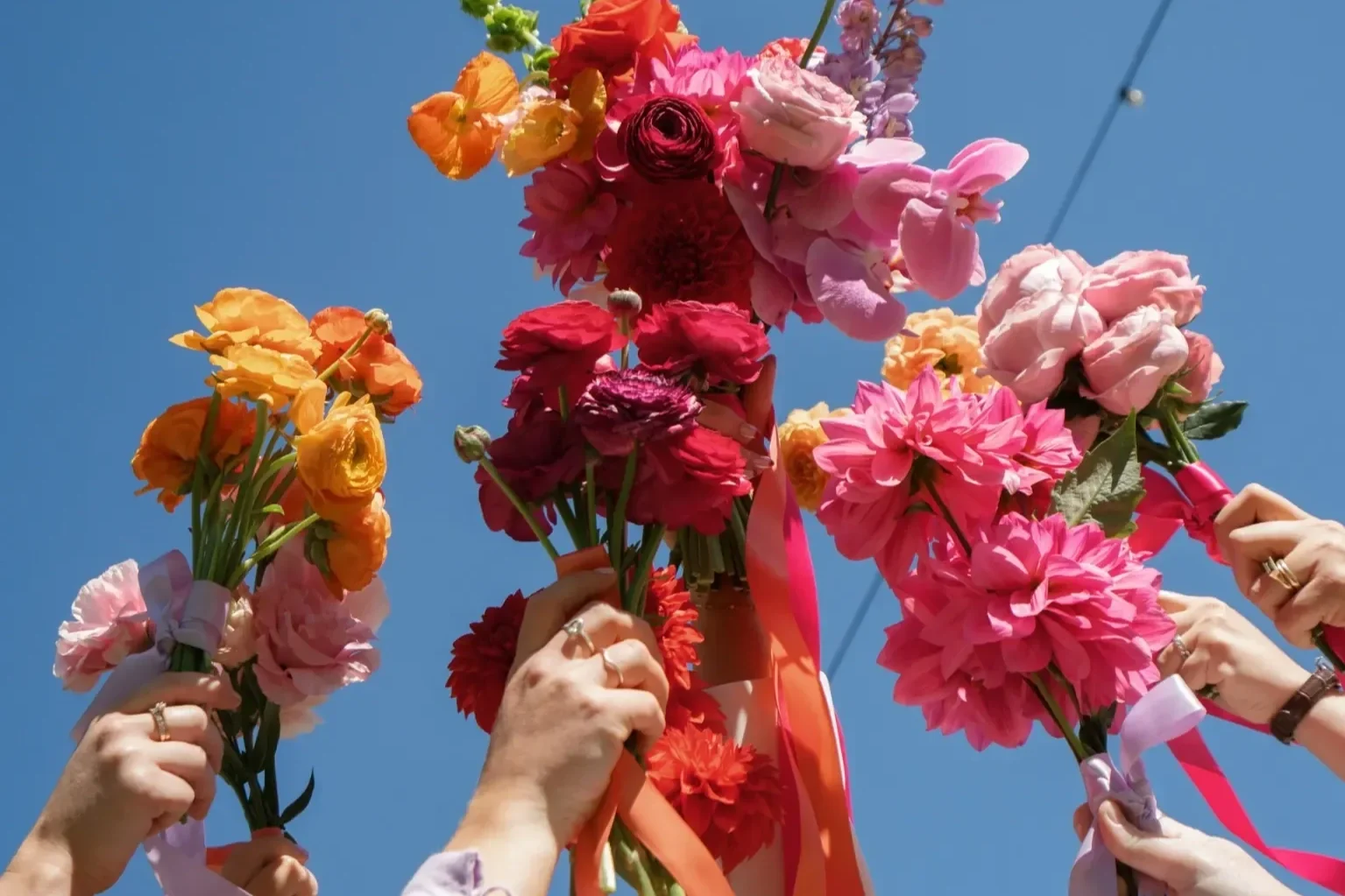
PHOTO BY: Dargent weddings
Your bouquet will be in every single photo. Let's make sure it's the right one.
It's the thing your hands hold at the altar. It's front and centre in every ceremony shot, every portrait, every "first look" your photographer captures. And yet it's one of the most commonly under-researched decisions in the whole wedding planning process.
Most couples come to us knowing they want something "romantic" or "natural" or "not too stiff" - which is a completely reasonable starting point. But bouquet style is more than aesthetic preference. It interacts with your dress silhouette, your height, your venue, and your season in ways that are worth understanding before you fall in love with something on Pinterest.
Here's an honest guide to the main bouquet styles, what they actually look like in person, and which dress silhouettes they work with best.
✦
The main bouquet styles - and what they actually mean
The floral industry has a habit of using terms loosely. One florist's "garden style" is another's "loose and organic." So let's define things clearly before we go any further.
✦
The cascading bouquet
A cascading bouquet - sometimes called a trailing or shower bouquet - flows downward from the hand, often dramatically. Think Princess Diana's iconic arrangement, or the lush, tumbling designs that have had a quieter modern revival with trailing foliage, orchids, and delicate vines.
Modern cascades are very different from the stiff, triangular versions of the nineties. Done well, they're genuinely breathtaking - sculptural and romantic at the same time.
What it works with: Cascades suit longer silhouettes best - fit-and-flare, column, and A-line gowns. They're particularly beautiful against a long train. On a shorter or fuller skirt, the proportions can compete rather than complement. Height is also a factor: cascades tend to photograph best on taller brides because the full length of the trail is visible.
The honest note: If you've seen a cascade on Pinterest and loved it, bring that image to your consultation. Cascades are highly style-dependent - the difference between a modern trailing design and an outdated shower bouquet comes down entirely to stem selection and structure.
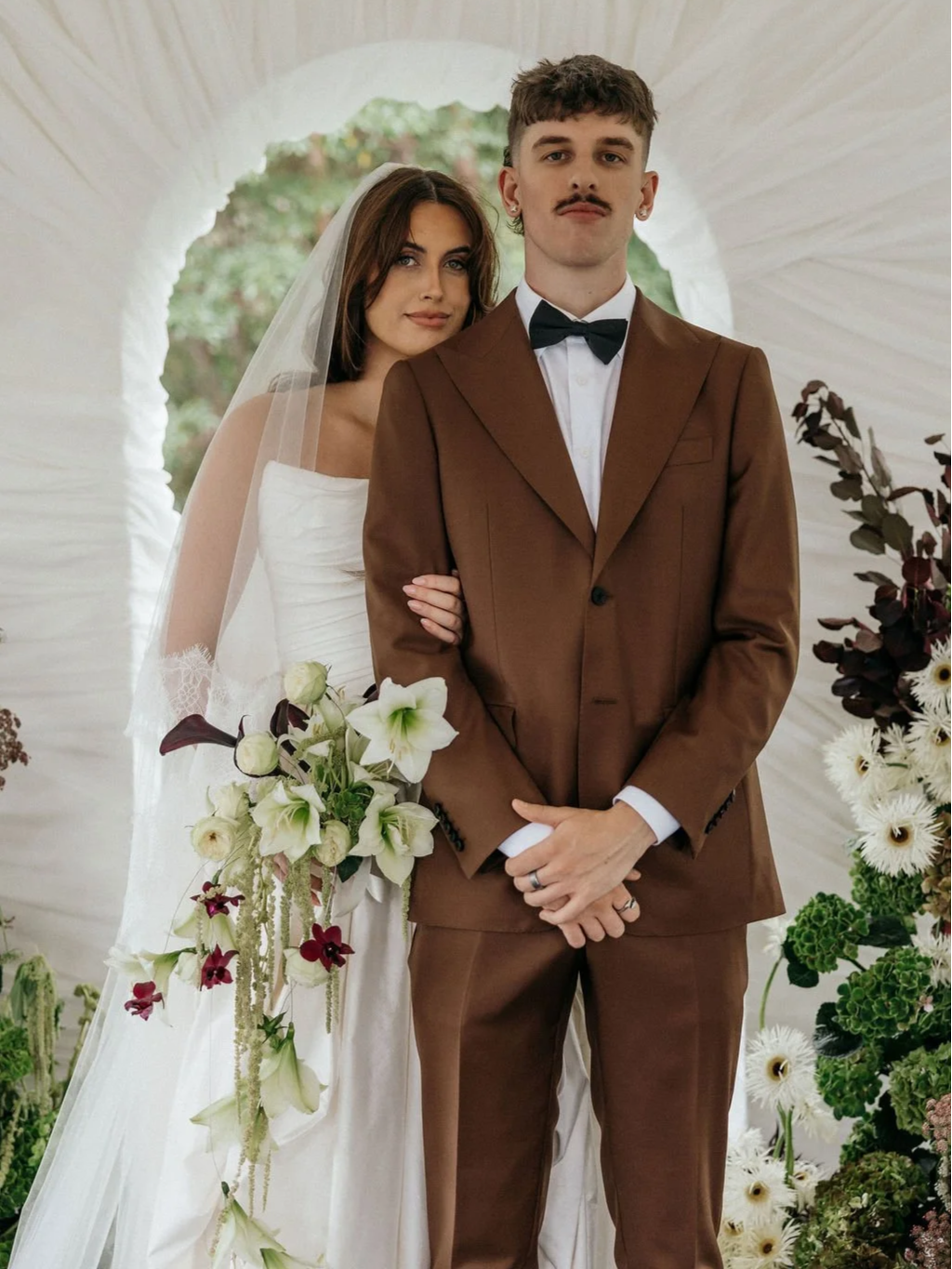
Photo By: Haus of rae
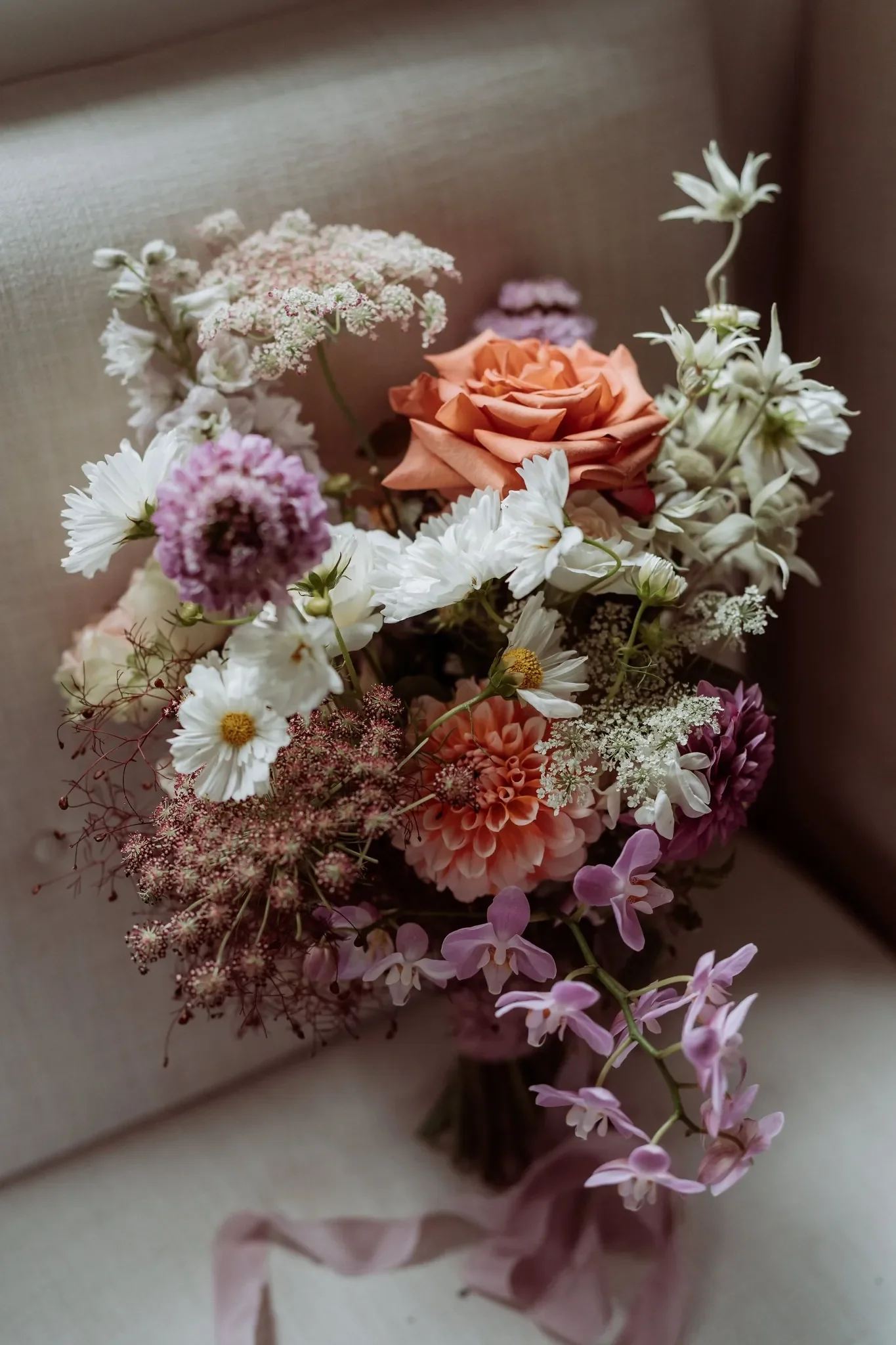
PHOTO: Todd Hunter mcgaw
✦
The modern structured bouquet
This is the most classic bouquet form - a generally rounded shape that still has air and movement in it. Not a tight, formal dome, and not a loosely gathered garden bunch either. Think of it as the middle ground: considered and intentional in its structure, but with enough looseness that it feels alive rather than arranged.
Done well, it's timeless in the best possible way.
What it works with: Almost every silhouette, which is part of why it's so popular. It's particularly flattering with ballgowns and full skirts, where a very loose bouquet can get visually swallowed. It also photographs cleanly and consistently - important if you want reliable shots throughout a long ceremony and reception.
The honest note: The difference between a structured bouquet that feels modern and one that feels stiff is entirely in how it's built. We're always working with a little movement and irregularity - no perfectly clipped edges, no tight ball shapes. The structure is the bones, not the cage.
✦
The loose and wild bouquet
A unique style that some more adventurous brides are drawn to - and the one that requires the most trust in your florist.
Loose and wild bouquets look effortless. They look like someone just gathered armfuls of the most beautiful things from a country garden and handed them over. They are not effortless. Achieving that "just-picked" quality with the right proportions, the right stem lengths, and the right mix of textures is genuinely skilled work.
Done wrong, loose bouquets look like they're falling apart. Done right, they're the most photographable bouquet of all.
What it works with: Loose and wild bouquets suit relaxed, romantic silhouettes - wrap dresses, softer fabrics, boho or vintage gowns. They're also wonderful against simpler dresses: a minimalist slip or a clean-lined crepe gown paired with a lush, overflowing bouquet creates a beautiful tension. What they need is scale. A small loose bouquet can look a little sad; this style rewards generosity.
The honest note: If you want loose and wild, seasonal flexibility matters more here than with any other style. The "just-picked" look depends on having a rich variety of stems to work with. A winter loose bouquet is still beautiful - but it will look different from a spring one, and that's worth discussing with your florist upfront.
✦
The petite en masse bouquet
Worth a mention because it gets overlooked. An en masse bouquet is built from a single variety - or occasionally two - repeated in abundance. No filler, no mixed textures, just one beautiful stem done with total commitment. It's not a compromise or a budget-cut - in the right context, it's one of the most sophisticated design choices you can make.
Think a cluster of white ranunculus. A handful of garden roses in a single blush tone. A bundle of sweet peas in one colour, wrapped simply and carried loosely. The restraint is the point.
What it works with: En masse bouquets suit minimalist and modern gowns beautifully - clean-lined crepe, simple silk, structured tailoring. They're also the right call for brides who want their flowers to feel intentional rather than abundant. There's a confidence to carrying one variety done perfectly.
The honest note: The en masse bouquet lives or dies on stem quality. When you're not hiding anything behind mixed textures, every bloom needs to be perfect. This is a style that rewards a florist who sources obsessively - and one of the reasons we love doing them.
✦
The question we always ask
Before we talk stems or style, we ask every bride the same thing: how do you want to feel when you're holding it?
Grounded and elegant? You probably want structure. Romantic and a little wild? Loose. Dramatic and unforgettable? We're talking cascade. Refined and completely yourself? A perfect petite en masse might be exactly right.
The style follows the feeling. The stems follow the season. That's how we build a bouquet that belongs to you.
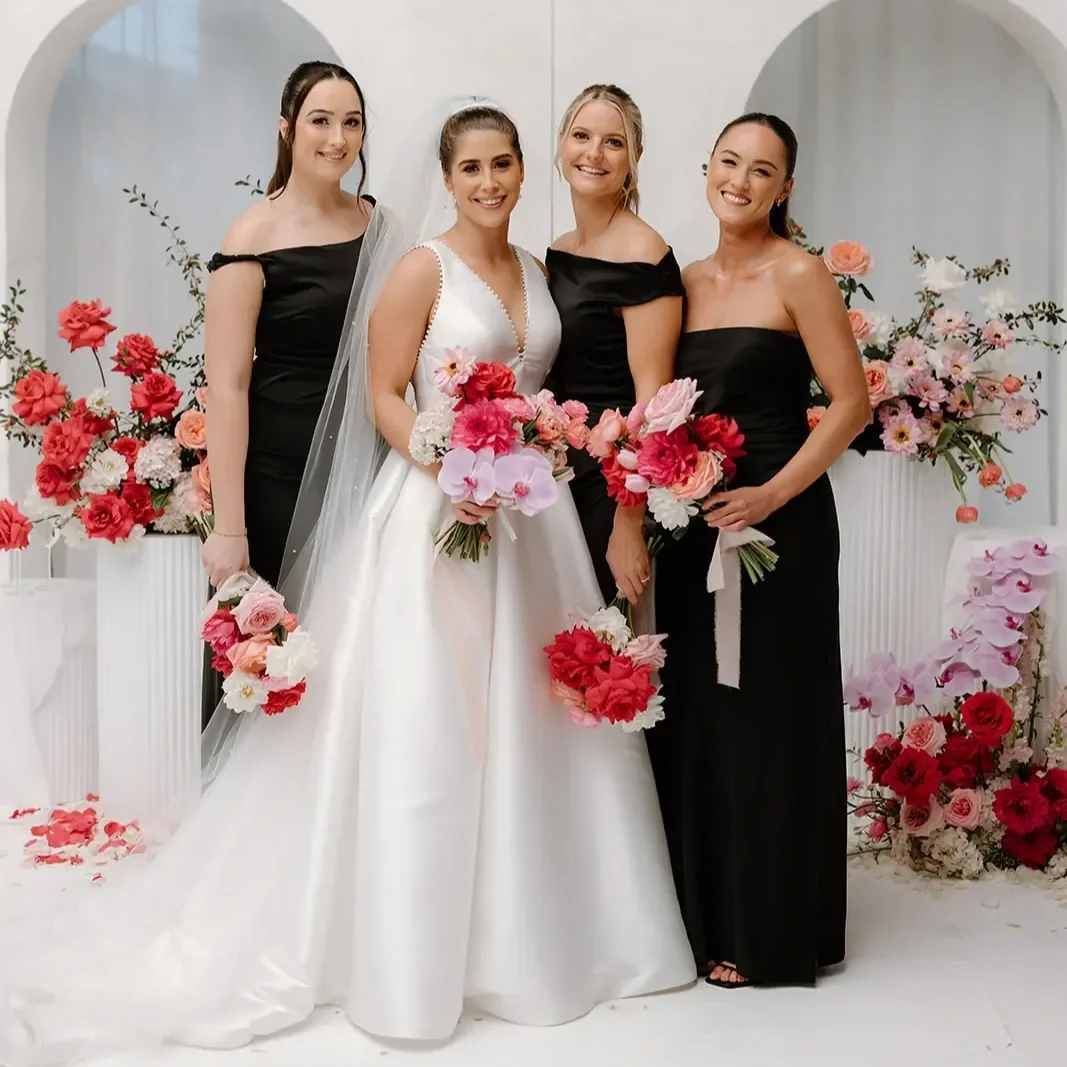
photo by: About time co.
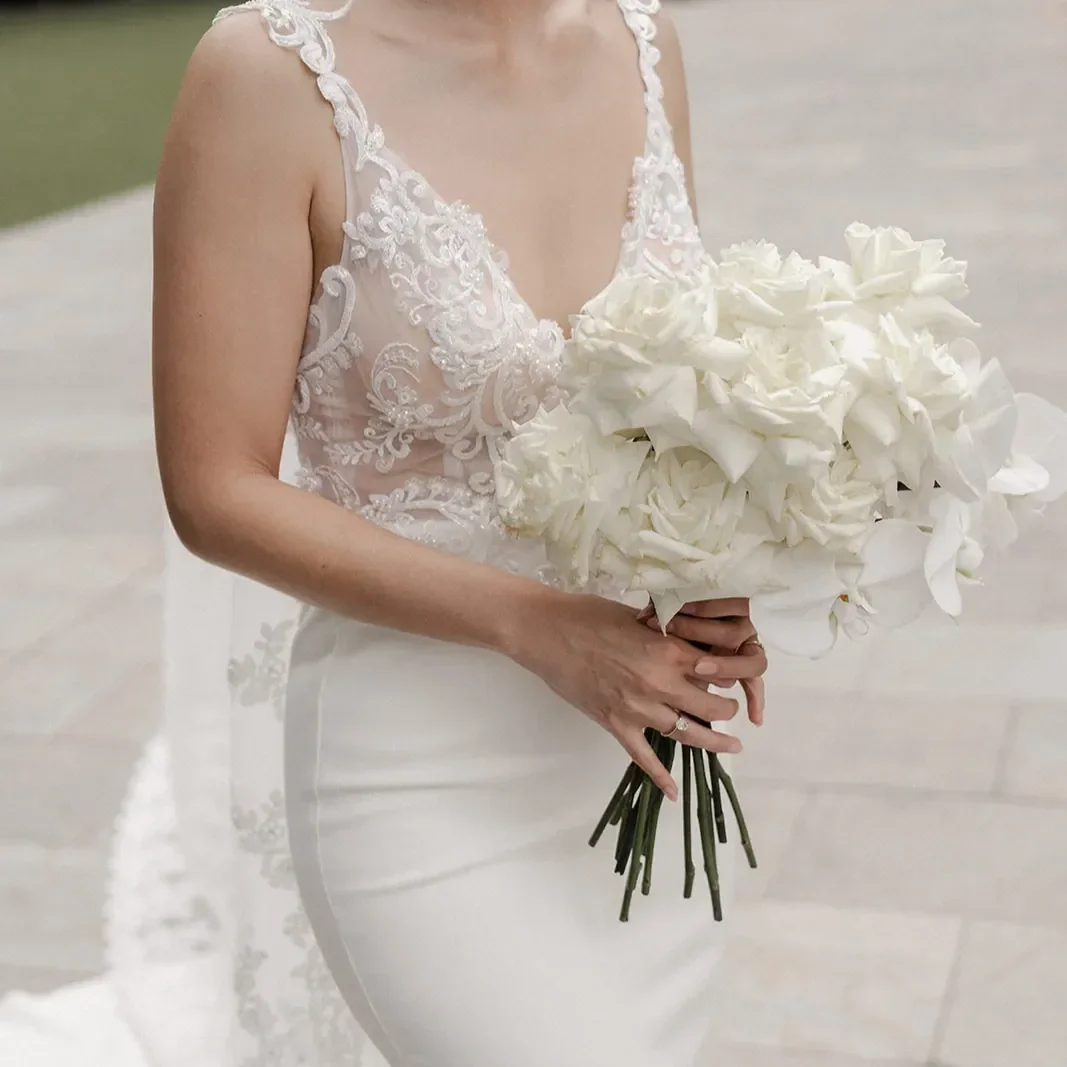
PHOTO BY: salt media
Ready to talk about your bouquet?
Bring your dress inspo, your Pinterest saves, and any adjectives that feel right. We'll take it from there. - Kat